
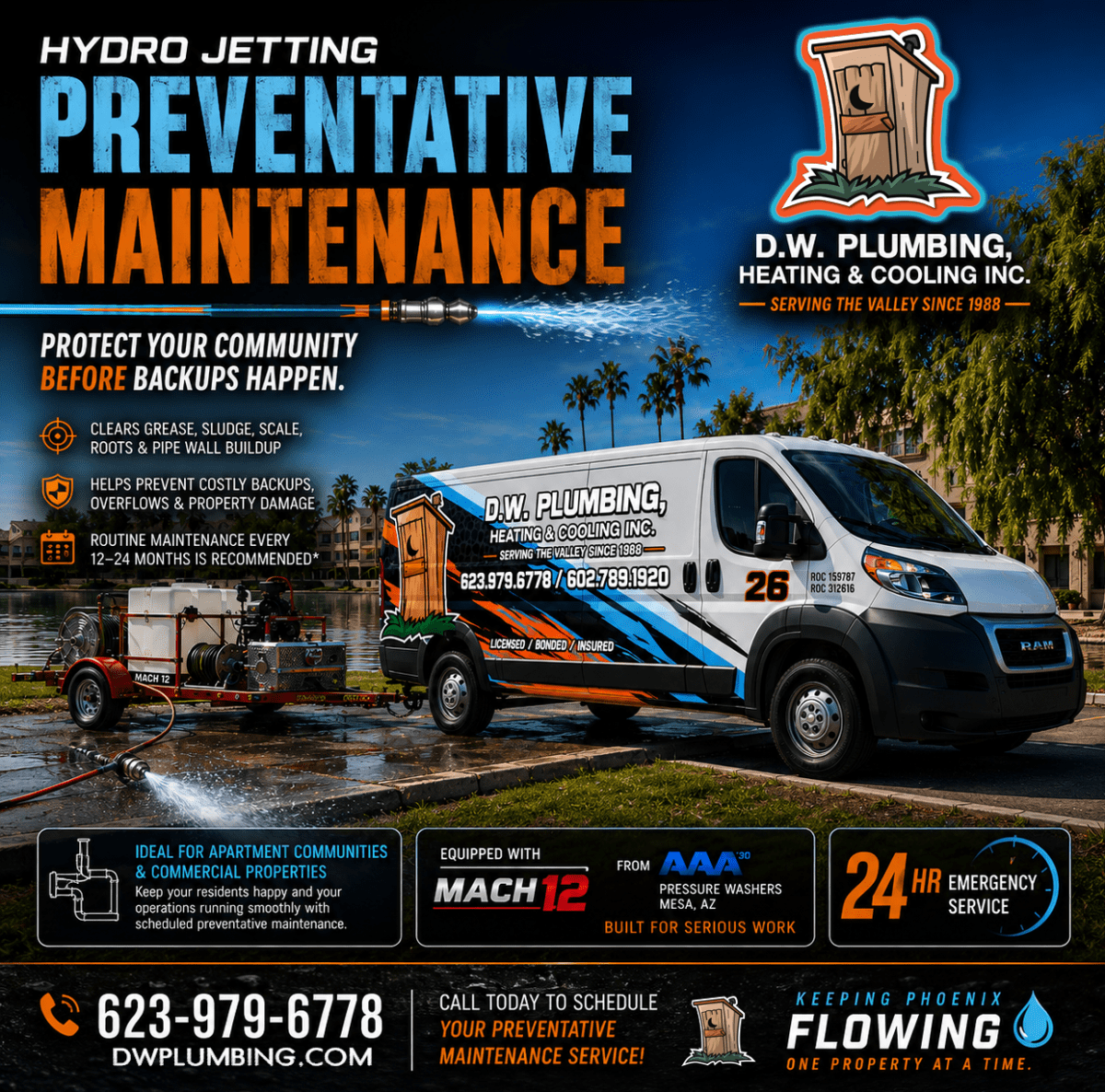
Plumbing emergencies can disrupt business operations, inconvenience tenants, damage property, and lead to expensive repairs. Fortunately, many of these issues are preventable with a proactive maintenance plan.
For commercial buildings, apartment communities, office complexes, retail centers, and industrial facilities, preventative plumbing maintenance is one of the smartest investments a property owner or manager can make.
At D.W. Plumbing, Heating & Cooling, we help commercial properties throughout the Phoenix Metro area reduce downtime, extend the life of their plumbing systems, and avoid costly emergency repairs through customized preventative maintenance programs.
What Is Preventative Plumbing Maintenance?
Preventative plumbing maintenance is the routine inspection, testing, cleaning, and servicing of plumbing systems before problems occur.
Instead of waiting for a leak, clog, or equipment failure, preventive maintenance helps identify small issues early—before they become expensive emergencies.
A well-maintained plumbing system is more reliable, efficient, and less likely to experience unexpected failures.
Why Preventative Plumbing Matters
Commercial plumbing systems experience significantly more daily use than residential systems. Restrooms, kitchens, laundry rooms, irrigation systems, mechanical rooms, and water distribution equipment all operate under constant demand.
Without routine maintenance, small problems can quickly escalate into major disruptions.
Preventative maintenance helps:
- Reduce emergency service calls
- Extend the life of plumbing equipment
- Lower repair costs
- Improve water efficiency
- Protect tenant satisfaction
- Reduce water damage risks
- Improve system reliability
- Support long-term budgeting
Preventive maintenance often costs far less than responding to emergency plumbing failures.
Key Components of a Commercial Plumbing Maintenance Program
Inspect Water Supply Lines
Routine inspections help identify:
- Corrosion
- Leaks
- Loose fittings
- Pressure issues
- Aging piping
Early detection can prevent significant water damage and unexpected pipe failures.
Test Water Pressure
Excessively high or low water pressure can shorten the life of plumbing fixtures and equipment.
Regular pressure testing helps identify:
- Pressure regulator issues
- Hidden leaks
- System restrictions
- Supply problems
Maintaining proper pressure improves efficiency and protects your plumbing system.
Inspect Water Heaters and Boilers
Commercial water heating equipment should be inspected regularly for:
- Leaks
- Temperature settings
- Pressure relief valves
- Corrosion
- Sediment buildup
- Burner performance (gas systems)
Routine servicing improves efficiency and extends equipment life.
Clean Drain Lines
Drain lines accumulate grease, soap residue, scale, debris, and other materials over time.
Scheduled drain cleaning helps prevent:
- Slow drains
- Backups
- Sewer odors
- Emergency service calls
High-use facilities often benefit from scheduled hydro jetting as part of a preventative maintenance plan.
Perform Sewer Camera Inspections
Video camera inspections allow technicians to evaluate underground piping without excavation.
Camera inspections can identify:
- Root intrusion
- Broken pipes
- Offset joints
- Grease buildup
- Pipe deterioration
- Blockages
Identifying these issues early can prevent costly sewer failures.
Inspect Fixtures and Faucets
Small fixture leaks waste thousands of gallons of water every year.
Routine inspections should include:
- Faucets
- Flush valves
- Toilets
- Urinals
- Sink drains
- Shower valves
Replacing worn components early helps reduce water waste and utility expenses.
Check Backflow Prevention Devices
Commercial properties often require annual backflow testing.
Routine inspections help ensure:
- Compliance with local regulations
- Safe drinking water
- Proper device operation
Testing should always be performed by certified professionals.
Inspect Pumps and Mechanical Equipment
Many commercial facilities rely on:
- Booster pumps
- Sewage ejector pumps
- Sump pumps
- Recirculation pumps
Routine inspections help identify:
- Bearing wear
- Seal failures
- Motor issues
- Vibration
- Electrical concerns
Preventive servicing helps reduce unexpected equipment failures.
Evaluate Shut-Off Valves
Emergency shut-off valves should be exercised and inspected regularly.
Technicians verify:
- Accessibility
- Proper operation
- Signs of corrosion
- Leaks
- Valve integrity
Knowing your valves work before an emergency can significantly reduce water damage.
Review Water Usage Trends
Monitoring water consumption can reveal hidden plumbing problems before they become visible.
Unexpected increases in water usage may indicate:
- Underground leaks
- Running fixtures
- Irrigation issues
- Mechanical equipment failures
Water usage analysis is an often-overlooked but valuable maintenance tool.
How Often Should Commercial Plumbing Be Inspected?
The ideal maintenance schedule depends on the size, age, and usage of your property.
A general guideline includes:
Monthly
- Visual plumbing inspections
- Leak detection
- Fixture checks
- Water pressure verification
Quarterly
- Drain maintenance
- Mechanical equipment inspections
- Valve testing
- Water heater inspections
Semi-Annually
- Sewer camera inspections (as needed)
- Hydro jetting for high-use drain systems
- Pump servicing
Annually
- Comprehensive plumbing system inspection
- Backflow testing (where required)
- Water heater flushing and servicing
- Preventative maintenance review
High-demand properties may require more frequent inspections.
Signs Your Commercial Property Needs Plumbing Maintenance
Don’t wait for a major failure if you notice:
- Recurring drain backups
- Slow drains
- Water stains
- Unexplained increases in water bills
- Low water pressure
- Corroded piping
- Running toilets
- Frequent plumbing repairs
- Sewer odors
- Equipment leaks
Addressing these issues early helps avoid larger and more expensive problems.
Benefits of Partnering with a Preventative Maintenance Provider
Working with an experienced commercial plumbing contractor provides:
- Scheduled inspections
- Priority emergency response
- Reduced downtime
- Predictable maintenance costs
- Longer equipment life
- Improved tenant satisfaction
- Detailed inspection reports
- Expert recommendations for future repairs and upgrades
A dedicated maintenance partner helps you stay ahead of issues rather than reacting to them.
Why Choose D.W. Plumbing, Heating & Cooling?
At D.W. Plumbing, Heating & Cooling, we specialize in preventative plumbing maintenance for apartment communities, commercial buildings, office complexes, retail centers, and multi-family properties throughout the Phoenix Metro area.
Our experienced technicians provide thorough inspections, preventative maintenance, drain cleaning, sewer camera inspections, hydro jetting, water heater service, backflow testing, and emergency plumbing support to help keep your property operating without interruption.
Whether you manage a single commercial building or an entire portfolio of properties, we’ll work with you to develop a customized maintenance program that fits your property’s needs and budget.
Ready to reduce plumbing emergencies and protect your investment? Contact D.W. Plumbing, Heating & Cooling today to schedule a preventative plumbing inspection or discuss a maintenance program tailored to your commercial property.
 Chronicles of D.W.